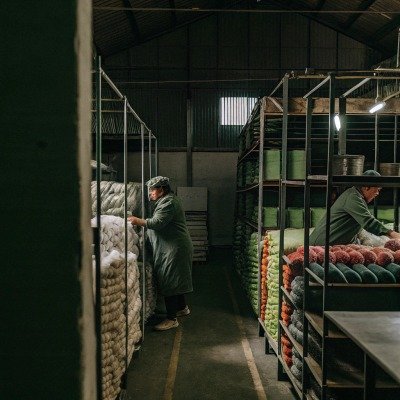
We know the frustration of holding dead stock while waiting for a massive factory to fit a small custom order into their rigid schedule. In our daily operations, we constantly balance the need for high-volume efficiency with the nuanced demands of craft wholesalers who require variety over sheer bulk.
For craft wholesalers requiring diverse color palettes and rapid turnover, prioritize medium-scale factories with extensive ready-to-ship inventory over massive industrial mills. These suppliers offer the ideal balance of consistent quality, lower Minimum Order Quantities (MOQs), and the agility to restock fast-selling seasonal shades immediately.
Let’s break down exactly why factory size dictates your inventory flow, profit margins, and ability to scale.
Does a massive production scale guarantee the consistent quality I need for dyed wool?
In our dyeing workshop, we have seen that huge capacity often leads to batch mixing issues rather than the perfection buyers expect. We frequently see samples from giant competitors where speed was prioritized over the meticulous care required for craft-grade fibers.
Massive scale does not inherently guarantee superior consistency for dyed wool, as high-volume vats can struggle with precise color matching across smaller lots. Medium-scale facilities often maintain tighter quality control on specific dye recipes, ensuring that your “Forest Green” remains consistent from one shipment to the next.
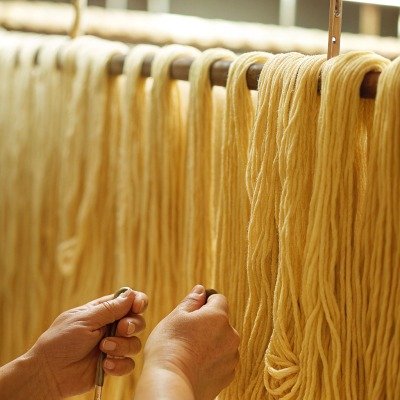
Many wholesalers operate under the assumption that the largest factories have the most advanced machinery and, therefore, the best quality. While it is true that industrial-scale mills possess high-tech gilling and combing machines, their processes are designed for commodity output—think carpet wool or standard apparel blends—rather than the high-specification requirements of needle felting or hand spinning.
When we calibrate our machines, we focus on removing “neps” (small tangles of fiber) and vegetable matter (VM) vegetable matter 1. vegetable matter 2 In a massive factory producing 50 tons a day, the acceptable tolerance for VM is often higher because the wool is expected to be processed further by industrial carders. However, for your customers—the hand crafters—visual perfection is non-negotiable. A hobbyist felting a miniature animal cannot hide a burr or a seed inside their work. Large-scale production lines cannot easily stop to address minor irregularities in a 500-pound run, whereas agile lines can pause and adjust immediately.
The Impact of Batch Sizes on Dye Uniformity
The physics of dyeing wool changes with volume. dyeing wool 3 dyeing wool 4 Giant vats that hold thousands of pounds of fiber can experience temperature gradients, leading to uneven saturation. This results in "heathered" or inconsistent coloring within a single top. For craft retailers, consistency is key. If a customer buys a "Sky Blue" today and needs another ounce next month to finish a project, it must match exactly.
Quality Control Focus by Factory Scale
The following table illustrates where different scales of manufacturing place their quality control emphasis:
| Feature | Industrial Scale Factory (50+ Tons/Month) | Agile/Medium Scale Factory (Stock-Based) |
|---|---|---|
| Primary Goal | Throughput and Speed | Visual Appeal and Hand-Feel |
| Fiber Alignment | Excellent (Automated) | Very Good (Often Hand-Checked) |
| Vegetable Matter | Moderate Tolerance (Industrial Standards) | Zero Tolerance (Craft Standards) |
| Color Precision | Batch-to-Batch Variation Common | High Consistency via Smaller Lots |
| Defect Removal | Automated Sensors | Manual Inspection + Sensors |
By understanding these distinctions, you can see that “bigger” often means “faster,” but not necessarily “cleaner” or “more consistent” for the specific needs of the arts and crafts market.
Will a smaller wool top factory offer more flexible low MOQ options for my inventory?
When we configure our inventory systems, we prioritize keeping hundreds of colors on the shelf so you don’t have to buy a container of just one shade. We understand that your capital is better spent on marketing than on warehousing two years’ worth of a single slow-moving color.
Smaller and medium-sized factories are significantly more likely to offer flexible low MOQ options because their business models rely on servicing diverse orders rather than filling massive production slots. This allows wholesalers to test new colors with minimal risk without committing to thousands of pounds upfront.
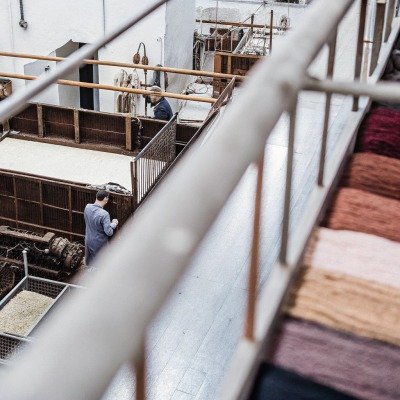
Inventory management is the silent killer of wholesale businesses. Inventory management 5 If you are forced to purchase 500 kilograms of “Neon Green” just to meet a factory’s minimum order requirement, you are tying up cash that could be used to stock 50 different best-selling neutrals. This is the fundamental disconnect between industrial mills and craft wholesalers. Industrial mills run continuously; stopping a line to produce a mere 50 kilograms of a specific color costs them money. Therefore, they impose high MOQs to discourage small orders.
On the other hand, factories designed with the craft market in mind—like the one we operate—build their infrastructure around variety. We maintain “greige” (undyed) stock and dye in smaller batches, or we keep fully finished stock of popular colors ready to pick and pack. This flexibility transforms your business model. Instead of being a warehouse for a factory, you become a curator for your customers.
The Math of Inventory Turnover
Consider the needle felting market. needle felting 6 A single project might require ten different colors in very small amounts. To serve this market effectively, you need a catalog of 50 to 100 shades. If you source from a massive factory with a 100kg MOQ per color, you would need to buy 5,000kg of wool just to launch your basic range. That is a massive capital risk.
Risk Mitigation Strategies
Working with a factory that allows low MOQs (e.g., 5kg or 10kg per color) allows you to:
- Test Markets: Introduce a new seasonal palette (like "Autumn Spices") without committing to a full production run.
- Reduce Storage Costs: You store only what sells, replenishing stock monthly rather than annually.
- Increase Cash Flow: Money is not stuck in slow-moving inventory.
Ultimately, flexibility in ordering is a financial tool. It allows you to pivot quickly when trends change, ensuring you are never stuck with unmovable pallets of last year’s trendy color.
Do larger manufacturers actually ship faster than agile suppliers with ready stock?
Our logistics team constantly beats the delivery times of giant competitors because we ship from existing warehouse shelves rather than waiting for a production slot to open. We have seen buyers lose entire selling seasons because they were stuck in a six-week queue at a larger mill.
Larger manufacturers often ship slower than agile suppliers because they operate on rigid “made-to-order” production cycles that require months of lead time. Conversely, agile suppliers with ready stock can dispatch orders within days, allowing wholesalers to replenish inventory rapidly in response to sudden market trends.
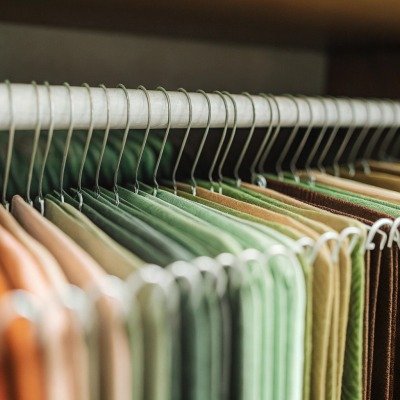
There is a persistent myth that larger factories have better logistics. While they may have more shipping docks, their internal bureaucracy and production scheduling are often bottlenecks. Large mills operate on a “campaign” basis. They might dedicate the entire month of March to running white wool, and April to running black wool. If you place an order for red wool in March, you wait. You are placed in a queue behind massive orders from global textile giants.
In contrast, when we manage our stock-based facility, our goal is immediate fulfillment. We view wool tops as finished goods on a shelf, not raw materials waiting to be processed. This difference is critical for e-commerce wholesalers. In the age of Amazon, your customers expect speed. If a specific craft goes viral on social media—like the recent surge in making felted dryer balls—demand spikes overnight. If your supplier takes 45 days to manufacture and ship, the trend is over before your stock arrives.
The Lead Time Gap
The table below highlights the typical timeline differences between the two factory models:
| Process Step | Large "Made-to-Order" Mill | Agile "Ready-Stock" Factory |
|---|---|---|
| Order Confirmation | 3-5 Days (Bureaucratic approval) | 24 Hours |
| Production Slot | 30-60 Days (Queue system) | 0 Days (Already produced) |
| Quality Check | Post-production | Pre-checked on shelf |
| Packaging | 5-7 Days | 1-2 Days |
| Total Lead Time | 45-90 Days | 3-7 Days |
Strategic Replenishment
Speed is not just about impatience; it is about data. With an agile supplier, you can use "Just-in-Time" (JIT) inventory strategies. Just-in-Time 7 You monitor your sales data weekly and reorder only what is depleting. This keeps your warehouse lean and efficient. Relying on a slow, large manufacturer forces you into "forecasting," which is essentially gambling on what you think will sell three months from now.
Does a bigger factory scale always mean lower prices for my wholesale wool orders?
We often calculate quotes against massive industrial mills and find that their overhead costs prevent them from offering competitive pricing on the mixed-color orders craft wholesalers actually need. We know that hidden surcharges can destroy the margin you thought you had secured.
A bigger factory scale does not always result in lower prices for wholesale wool orders, especially when purchasing mixed color assortments. While industrial mills offer low rates for single-container commodity wool, they often apply steep surcharges for smaller, multi-color orders that disrupt their high-speed production lines.

Economies of scale are real, but they have specific conditions. Economies of scale 8 They work best when producing a uniform product in massive quantities. If you want to buy 20,000 pounds of undyed white 23-micron Merino wool Merino wool 9, a giant mill will likely offer the best price per pound. However, the moment you introduce complexity—such as requesting 20 different dyed colors, custom labeling, or specific roll weights—the economics shift dramatically.
Large factories have massive overheads: unionized labor, expensive machinery depreciation, and huge facility utility bills. To cover these costs when a production line stops to change colors, they charge “changeover fees” or “small lot surcharges.” These fees can increase your price per pound by 20% to 30%, erasing any base-price advantage they advertised. We have designed our pricing structure differently, absorbing complexity into our model because variety is our standard, not an exception.
Total Cost of Ownership (TCO)
When evaluating price, you must look beyond the sticker price per kilogram. You must calculate the Total Cost of Ownership. Total Cost of Ownership 10
- Holding Cost: If you must buy 6 months of stock to get a "low price," you are paying for storage, insurance, and the opportunity cost of that capital.
- Waste Cost: If the large mill forces you to buy large bundles that you cannot fully sell, the unsold portion increases the effective cost of the sold portion.
- Shipping Efficiency: Agile factories often excel at consolidating mixed boxes to maximize container space, whereas large mills may ship partial pallets if your order doesn't fit their standard packing configuration.
Price Structure Comparison
Here is how the pricing often breaks down for a typical wholesale order of 500kg mixed across 20 colors:
| Cost Component | Massive Factory Quote | Agile/Medium Factory Quote |
|---|---|---|
| Base Fiber Price | $10.00 / kg | $10.50 / kg |
| Dyeing Surcharge | +$2.00 / kg (Small batch penalty) | Included |
| Setup Fees | $500 flat fee | $0 |
| MOQ Penalty | +15% for orders < 1 ton | $0 |
| Effective Unit Price | ~$13.50 / kg | ~$10.50 / kg |
As the data shows, the “cheaper” large factory becomes more expensive once the realities of a craft order are applied. Prioritizing scale over fit is often a false economy.
Conclusion
When selecting a wool top supplier, do not be seduced by the sheer size of a factory. For craft wholesalers, profit lies in agility, color variety, and inventory turnover, not in bulk commodity purchasing. Prioritize a partner who stocks the rainbow, ships immediately, and understands that your business thrives on flexibility, not rigid industrial schedules.
Footnotes
1. Links to the International Wool Textile Organisation standards regarding vegetable matter content in wool. ↩︎
2. Official FAO documentation defining vegetable matter and other impurities found in raw wool batches. ↩︎
3. Academic research into the chemical and physical processes involved in industrial and artisanal wool dyeing. ↩︎
4. Provides technical background on the chemical and physical processes involved in dyeing wool fibers. ↩︎
5. References a major industry leader’s overview of inventory management principles and systems. ↩︎
6. Background information on the history and techniques of needle felting for craft applications. ↩︎
7. Links to the official Toyota Production System page, the originator of the JIT methodology. ↩︎
8. Defines the economic concept of cost advantages obtained due to the scale of operation. ↩︎
9. The global authority on wool provides technical specifications and benefits of high-quality Merino fibers. ↩︎
10. Provides a standard business definition for calculating the comprehensive cost of an asset. ↩︎