
In the quest for quieter and more productive environments, both at home and in the office, the importance of effective soundproofing cannot be overstated. Noise pollution can lead to stress, reduced concentration, and lower productivity. While many advanced materials are available for soundproofing, wool felt, a simple and versatile material, has gained attention for its potential to improve acoustic conditions. This article explores the role of wool felt in acoustics and how it can be used to enhance soundproofing in various settings.
Understanding the Acoustic Properties of Wool Felt
Wool felt is a non-woven textile material made by matting, condensing, and pressing wool fibers together. Its acoustic properties stem from its ability to absorb and dissipate sound waves. The densely packed fibers of wool felt create numerous air pockets that can trap sound waves, converting their energy into heat. This process is known as sound absorption, and it is particularly effective for reducing mid and high-frequency noises.
Sound Absorption and Noise Reduction
Wool felt has been shown to have a significant sound absorption coefficient, especially for mid and high-frequency sounds. In fact, studies have found that wool felt can attenuate sound pressure levels by between 1 dB and 10 dB. This makes it an excellent material for reducing echo and reverberation in rooms, creating a more comfortable acoustic environment.
The Difference Between Soundproofing and Sound Dampening
It is important to distinguish between soundproofing and sound dampening. Soundproofing refers to the complete blocking of sound transmission, while sound dampening involves reducing the amount of sound that reverberates within a space. Wool felt is more effective as a sound-dampening material rather than a soundproofing one. It can significantly reduce the amount of noise that bounces around a room, making it quieter and more conducive to activities that require concentration.
Practical Applications of Wool Felt in Homes and Offices
Wall Panels and Ceiling Tiles
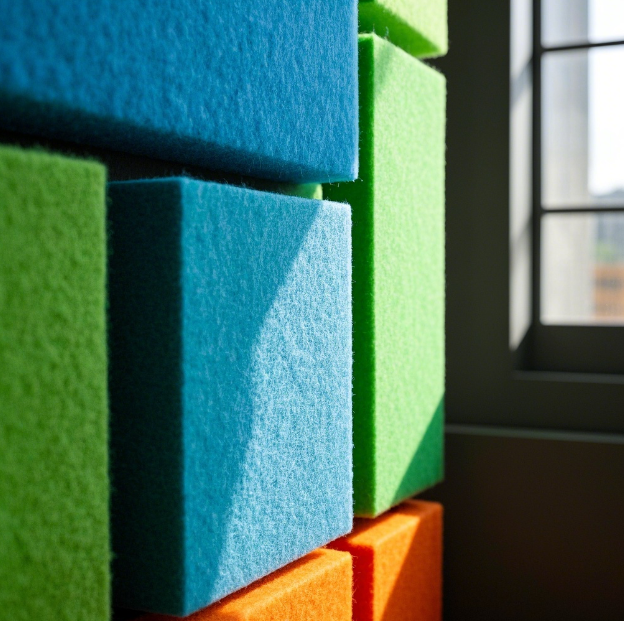
One of the most common uses of wool felt in acoustics is as wall panels and ceiling tiles. These panels can be easily installed on walls and ceilings to absorb sound waves and reduce echo. They are particularly effective in open-plan offices, where noise can quickly become a distraction. By installing wool felt panels, companies can create a more focused and productive work environment without sacrificing the benefits of an open layout.
Door and Window Insulation
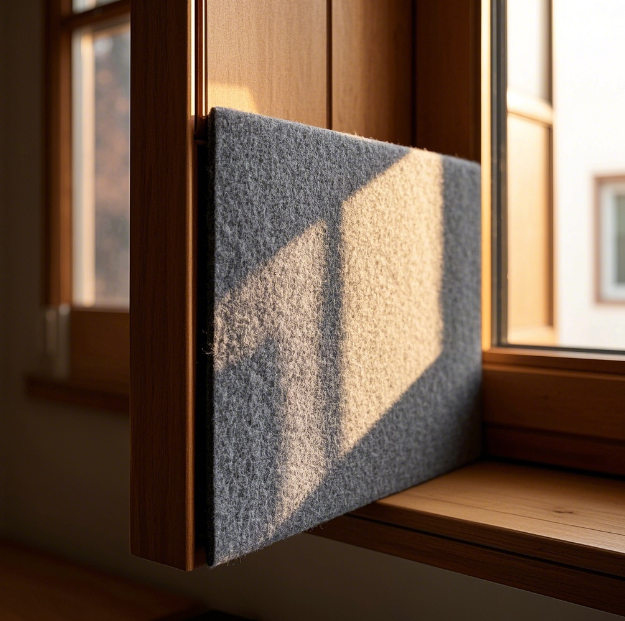
Wool felt can also be used to insulate doors and windows. By attaching felt fabric to door panels or window frames, it is possible to reduce the transmission of sound through these openings. This can be particularly useful in homes and offices located near busy streets or in noisy neighborhoods.
Partition Walls
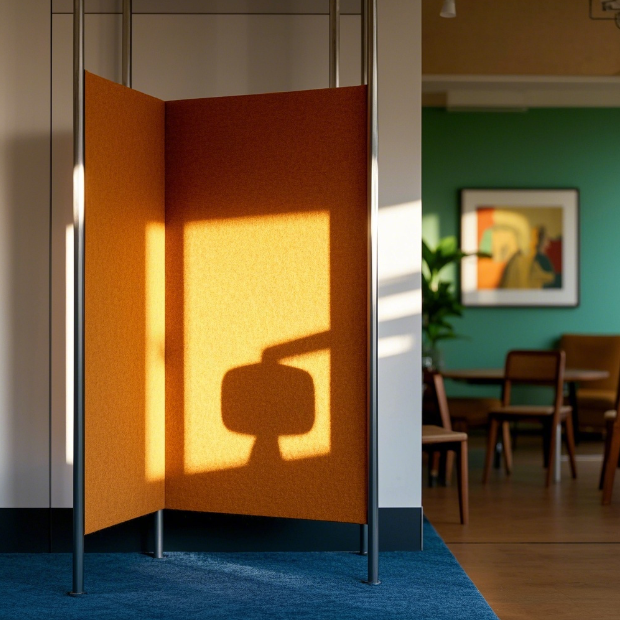
In office settings, wool felt can be used to create partition walls between different work areas. These partitions can help maintain privacy and reduce noise interference between adjacent spaces. For example, felt fabric can be used to create temporary walls in open-plan offices, allowing employees to work more independently while still being part of a collaborative environment.
Floor Underlayments

Another practical application of wool felt is as a floor underlayment. When placed beneath carpets or other flooring materials, felt can help reduce the transmission of impact noise, such as footsteps. This is particularly useful in multi-story buildings, where noise from upper floors can disturb occupants below.
Advantages of Wool Felt as an Acoustic Material
Aesthetics and Versatility
One of the key advantages of wool felt is its aesthetic appeal and versatility. Felt panels come in a variety of colors, patterns, and sizes, allowing them to be easily integrated into different interior design schemes. They can be used as decorative elements while also serving a functional purpose in sound management.
Cost-Effectiveness
Compared to some advanced soundproofing materials, wool felt is relatively inexpensive. This makes it an accessible option for homeowners and businesses looking to improve their acoustic conditions without breaking the bank.
Sustainability
Wool felt is also an environmentally friendly material. It can be made from recycled fibers, reducing its environmental impact. This makes it an attractive choice for those who prioritize sustainability in their interior design and construction projects.
Conclusion
While wool felt may not be the ultimate solution for complete soundproofing, it is a highly effective material for sound dampening and reducing noise levels in homes and offices. Its ability to absorb sound waves, combined with its aesthetic appeal, versatility, and cost-effectiveness, makes it a valuable addition to any acoustic management strategy. By incorporating wool felt into interior design and construction projects, it is possible to create more comfortable, productive, and peaceful environments for both living and working.
Whether used as wall panels, ceiling tiles, door insulation, or floor underlayments, wool felt offers a simple yet effective way to enhance acoustic conditions. As awareness of the impact of noise on well-being and productivity grows, the role of materials like wool felt in creating better acoustic environments will only become more important